
IOT
The Internet of things encompasses electronics, communication, and computer science engineering. The Internet of things describes devices with sensors, processing ability, software and other technologies that connect and exchange data with other devices and systems over the Internet or other communications networks.
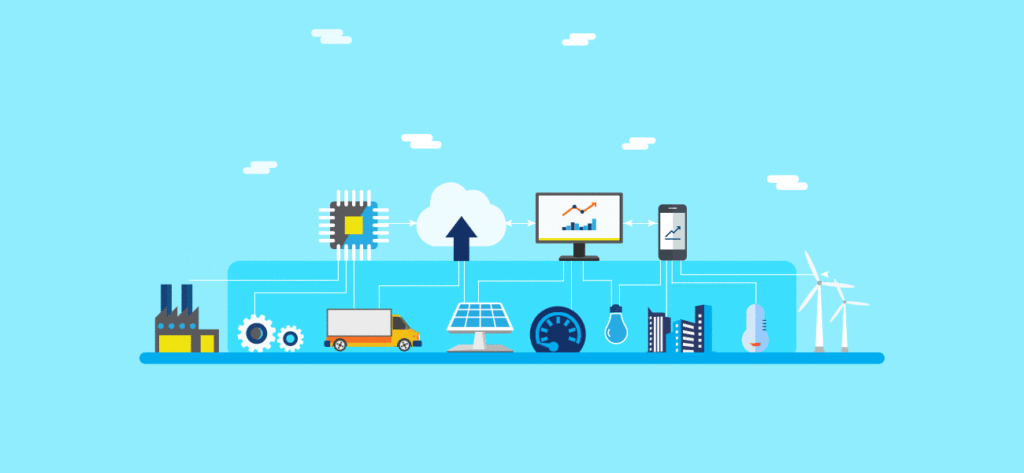

The term IoT, or Internet of Things, refers to the collective network of connected devices and the technology that facilitates communication between devices and the cloud, as well as between the devices themselves.
The Internet of Things (IoT) describes the network of physical objects—“things”—that are embedded with sensors, software, and other technologies for the purpose of connecting and exchanging data with other devices and systems over the internet. These devices range from ordinary household objects to sophisticated industrial tools. With more than 7 billion connected IoT devices today, experts are expecting this number to grow to 10 billion by 2020 and 22 billion by 2025.
IoT is network of interconnected computing devices which are embedded in everyday objects, enabling them to send and receive data.
Four Key Components of IOT
- Device or sensor
- Connectivity
- Data processing
- Interface
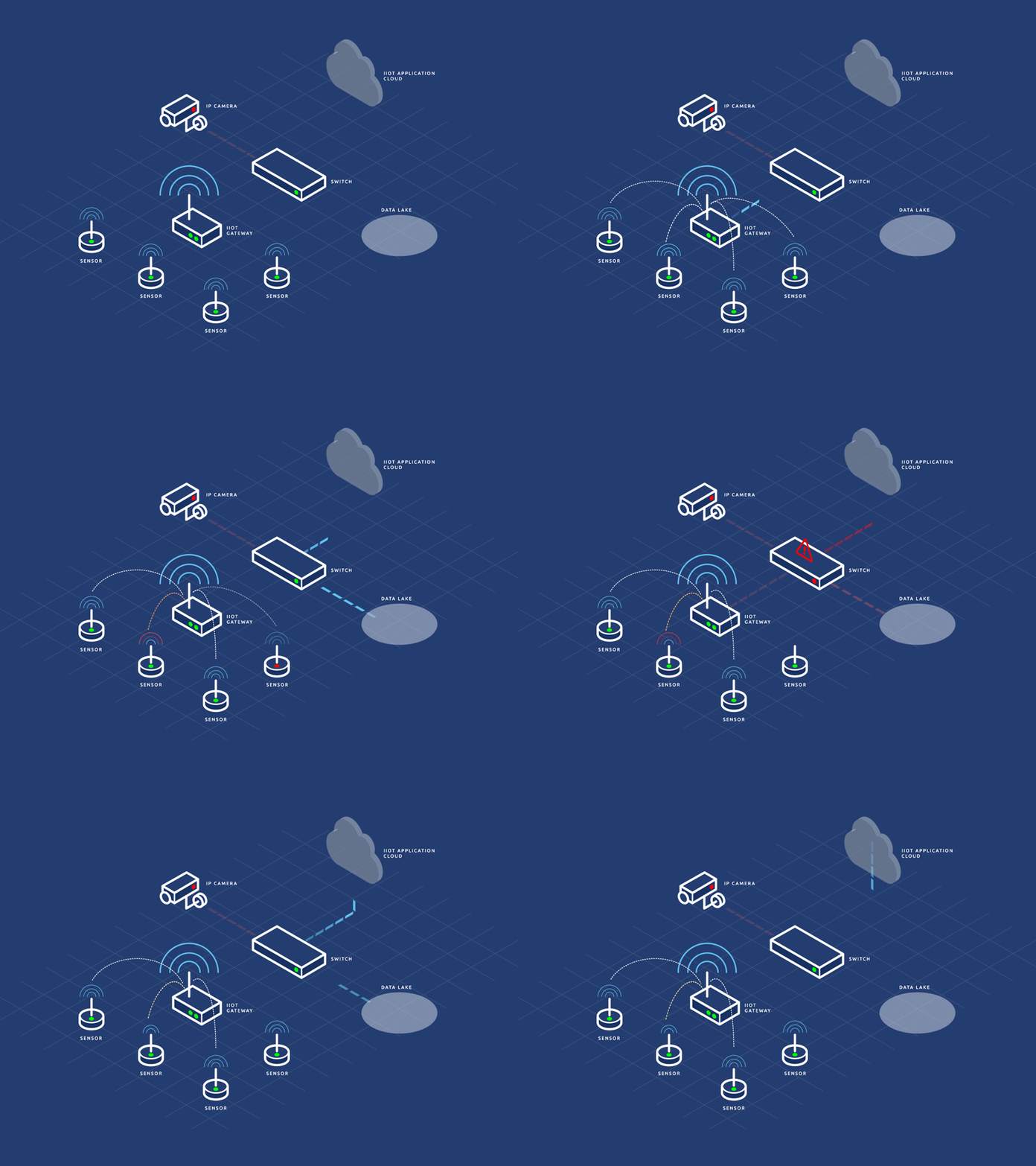
Main Components Used in IoT
- Low-power embedded systems: Less battery consumption, high performance are the inverse factors that play a significant role during the design of electronic systems.
- Sensors: Sensors are the major part of any IoT application. It is a physical device that measures and detects certain physical quantities and converts it into signal which can be provided as an input to processing or control unit for analysis purpose.
Different types of Sensors
- Temperature Sensors
- Image Sensors
- Gyro Sensors
- Obstacle Sensors
- RF Sensor
- IR Sensor
- MQ-02/05 Gas Sensor
- LDR Sensor
- Ultrasonic Distance Sensor
- Control Units: It is a unit of small computer on a single integrated circuit containing microprocessor or processing core, memory and programmable input/output devices/peripherals. It is responsible for major processing work of IoT devices and all logical operations are carried out here.
- Cloud computing: Data collected through IoT devices is massive, and this data has to be stored on a reliable storage server. This is where cloud computing comes into play. The data is processed and learned, giving more room for us to discover where things like electrical faults/errors are within the system.
- Availability of big data: We know that IoT relies heavily on sensors, especially in real-time. As these electronic devices spread throughout every field, their usage is going to trigger a massive flux of big data.
- Networking connection: In order to communicate, internet connectivity is a must, where each physical object is represented by an IP address. However, there are only a limited number of addresses available according to the IP naming. Due to the growing number of devices, this naming system will not be feasible anymore. Therefore, researchers are looking for another alternative naming system to represent each physical object.
Ways of Building IOT
There are two ways of building IoT:
- Form a separate internet work including only physical objects.
- Make the Internet ever more expansive, but this requires hard-core technologies such as rigorous cloud computing and rapid big data storage (expensive).
In the near future, IoT will become broader and more complex in terms of scope. It will change the world in terms of
Working with IoT Devices
- Collect and Transmit Data : For this purpose sensors are widely used they are used as per requirements in different application areas.
- Actuate device based on triggers produced by sensors or processing devices: If certain conditions are satisfied or according to user’s requirements if certain trigger is activated then which action to perform that is shown by Actuator devices.
- Receive Information: From network devices, users or devices can take certain information also for their analysis and processing purposes.
- Communication Assistance: Communication assistance is the phenomenon of communication between 2 networks or communication between 2 or more IoT devices of same or different networks. This can be achieved by different communication protocols like: MQTT, Constrained Application Protocol, ZigBee, FTP, HTTP etc.
Advantages of IoT
- Improved efficiency and automation of tasks.
- Increased convenience and accessibility of information.
- Better monitoring and control of devices and systems.
- Greater ability to gather and analyze data.
- Improved decision-making.
- Cost savings.
Disadvantages of IoT
- Security concerns and potential for hacking or data breaches.
- Privacy issues related to the collection and use of personal data.
- Dependence on technology and potential for system failures.
- Limited standardization and interoperability among devices.
- Complexity and increased maintenance requirements.
- High initial investment costs.
- Limited battery life on some devices.
- Concerns about job displacement due to automation.
- Limited regulation and legal framework for IoT, which can lead to confusion and uncertainty.
How is IoT changing the world?
IoT is reinventing the automobile by enabling connected cars. With IoT, car owners can operate their cars remotely—by, for example, preheating the car before the driver gets in it or by remotely summoning a car by phone. Given IoT’s ability to enable device-to-device communication, cars will even be able to book their own service appointments when warranted.
IoT allows manufacturers to upgrade their cars continuously with new software, a sea-change difference from the traditional model of car ownership in which vehicles immediately depreciate in performance and value.